
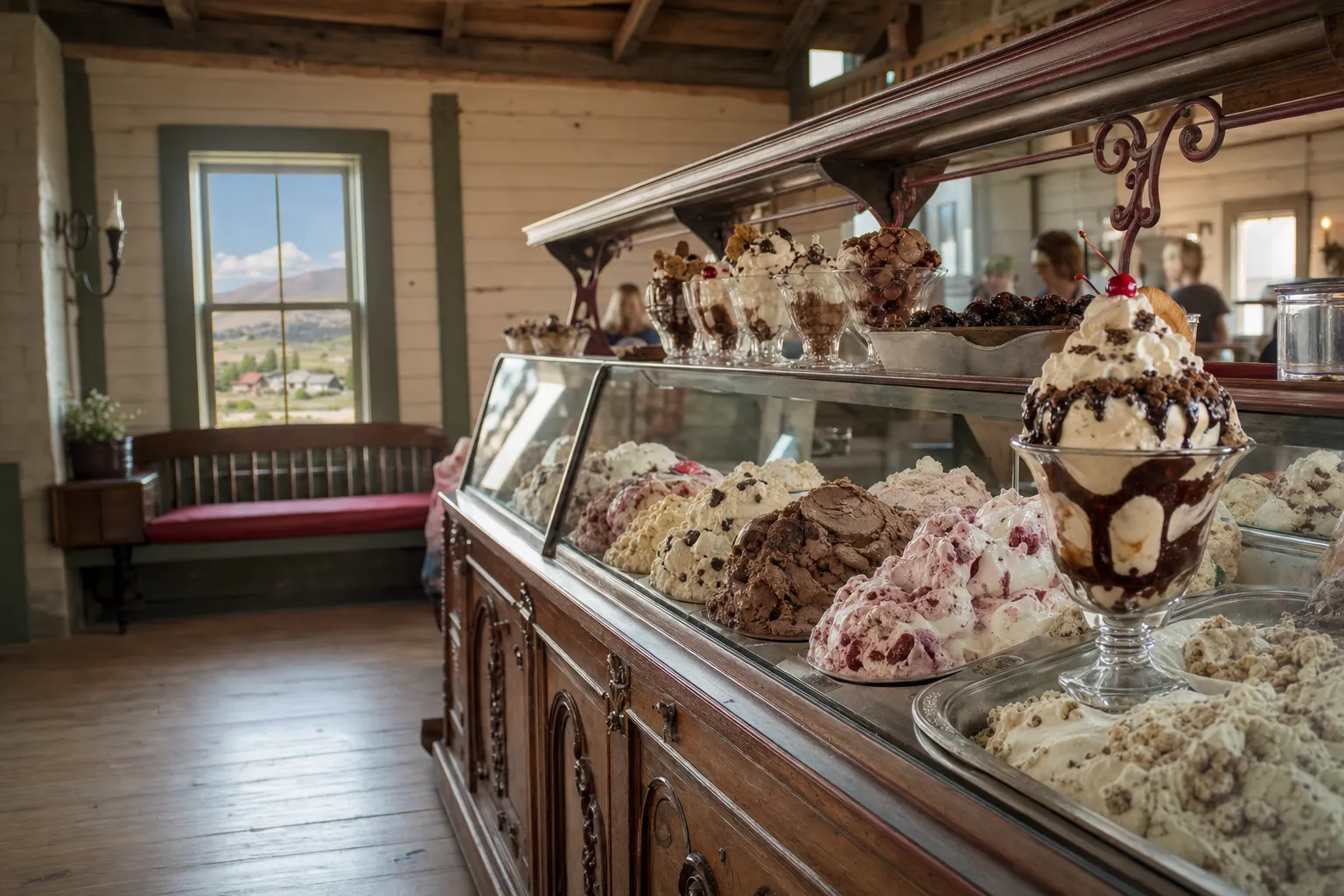
If you want to explore texture and mouthfeel, start by tasting two small scoops side by side: one plain base and one with chunky mix ins, then notice creaminess, density, smoothness and how the mix ins contrast with the ice cream. We recommend this approach at Brooker's Founding Flavors Ice Cream, Vineyard UT, because our small batch bases and bold mix ins make contrasts easy to spot.
What texture and mouthfeel mean for ice cream
Texture is the physical character you feel in your mouth. Mouthfeel is the combined sensation of temperature, creaminess, air, and any solids such as cookie pieces or fruit. Together they decide whether ice cream feels velvety, dense, airy, icy, chewy or crunchy.
We use those words when we describe scoops, sundaes and shakes so you can pick the experience you want.
Why texture and mouthfeel matter for your visit in Vineyard and nearby
Texture changes how flavors come across. A velvety vanilla lets subtle spices read as intended. A chunky, mix in heavy flavor gives a contrast that feels playful on a family outing. In Vineyard and the surrounding communities we serve, like Provo and Orem, people bring varied expectations. Some guests, like parents with kids, often want bold chunks and dramatic swirls. Others, like date night couples, want a silky, smooth scoop that tastes more focused.
When you know what to look for, you choose a scoop that matches the occasion, whether you are planning a birthday treat, a quick stop after a walk by the lake, or a dessert for a small group.
Key concepts to know when assessing texture and mouthfeel
- Fat and creaminess. Fat provides a round, silky mouthfeel and helps flavors linger.
- Overrun and airiness. The amount of air folded into ice cream affects density and lightness.
- Serving temperature. Slightly warmer scoops taste softer and reveal more flavor, colder scoops feel firmer and more refreshing.
- Ice crystals. Small crystals give a smooth feel. Large crystals create an icy, grainy impression.
- Mix ins and inclusions. Chunks, swirls and sauces add contrast and texture variety.
- Viscosity in milkshakes. Thickness and froth change how a shake coats your mouth compared with a scoop.
How we suggest you explore textures at Brooker's
- Start clean. Try a plain base first to notice the base's creaminess and smoothness.
- Compare with mix ins. Taste a flavor with chunky or gooey mix ins to see how they change the bite and balance.
- Note temperature effects. Let a small spoonful warm on your tongue to sense creaminess, then a colder bite to sense firmness.
- Try multiple formats. Contrast a scoop with a milkshake or sundae to see how textures translate across formats.
- Describe what you feel. Use words like velvety, dense, airy, grainy, chewy or crunchy to refine future choices.
Checklist for choosing an ice cream texture you will enjoy
Before you order
- Decide if you want silky and smooth, or bold and chunky.
- If sharing, pick one scoop that is plain and another with mix ins for contrast.
- Consider format: scoops showcase base texture, sundaes highlight sauce and crunch, shakes change mouth coating and thickness.
How scoop, sundae and milkshake textures compare
| Format | Texture highlights |
|---|---|
| Scoop | Shows base richness, creaminess, and overrun. Best to judge ice crystal size and smoothness. |
| Sundae | Sauces and toppings add sticky, crunchy and cooling contrasts. Ideal for layered mouthfeel experiences. |
| Milkshake | Blending changes viscosity and aeration. A thick shake coats your mouth differently than a scoop. |
Common questions we hear about texture and mouthfeel
People often confuse flavor intensity with texture. Texture can make a subtle flavor seem richer or a bold flavor feel lighter, depending on mouthfeel and temperature.
Below are quick answers to questions we get at the counter.
- Why does the same flavor feel different on different days? Ambient temperature, how long a tub has been open, and serving temperature all change mouthfeel.
- Will mix ins always make ice cream more textured? Yes, chunky or chewy inclusions add contrast, but high syrup swirl content can make the overall experience creamier or saucier instead.
- Is a thicker milkshake always better? Thicker shakes give a richer coating sensation, while thinner shakes feel lighter and more drinkable.
Related services that change texture experiences
At Brooker's Founding Flavors Ice Cream we present texture through our main offerings. If you want to compare formats, try our Ice Cream, then taste a Sundae and a Milkshake. Each service highlights texture differently and gives a clearer sense of mouthfeel choices.
Related locations and how local tastes influence texture
We are based in Vineyard, Utah. Local families, college students and tourists who visit often favor hearty portions and adventurous mix ins. If you are coming from nearby cities such as Provo, Orem or Lehi, expect similar preferences. For neighborhood pages and directions, see our Vineyard location information at Vineyard, Utah.
Helpful resources to learn more
If you want deeper reading on how ice cream structure is made, our topics page on Texture and Mouthfeel explains the basics and links to related articles on Mix Ins and Toppings and Flavor Development. Those pages are helpful if you want to understand why a base behaves a certain way or how we pick chunk sizes and swirl strengths.
Pro tip: When you want to test texture, choose a small plain scoop and a small scoop with a single dominant inclusion. That contrast tells you whether you prefer a base forward or mix in forward experience.
Key takeaway
Start with a plain base, then compare a mix in flavor and a different format such as a shake or sundae. Pay attention to creaminess, airiness, and how inclusions alter the bite. That quick comparison helps you pick the right dessert for the occasion.
Frequently asked questions
How do I tell if ice cream is too icy?
Icy texture comes from large ice crystals. If you feel a grainy coldness rather than a smooth cream, that suggests larger crystals. Serving temperature and storage matter, which is why freshly scooped, small batch ice cream often feels smoother.
What does overrun mean and how does it affect mouthfeel?
Overrun refers to air folded into ice cream. Higher overrun makes a lighter, fluffier mouthfeel. Lower overrun gives a denser, richer sensation. We balance overrun to suit each flavor and presentation.
Do mix ins make ice cream less creamy?
Mix ins add texture contrast. They can interrupt perceived creaminess, but they also make the overall experience more interesting. Depending on the inclusion type, a sauce swirl can enhance creaminess while chunks add chew and crunch.
Why do milkshakes feel different from scoops?
Blending changes the ice crystal structure and adds air. The result is a suspended, thicker liquid that coats your mouth. You get less bite from inclusions unless they are blended whole into the shake.
Learn more and plan your visit
Read customer reviews and get directions from our Google Business Profile, and explore related pages about our flavors and techniques on this site. For details about our Ice Cream, Sundaes and Milkshakes, visit the services and topics linked above or our location page for Vineyard, Utah.